
This week, we’re beginning the journey of Designing Your Physics Life. You are not just following a path—you’re building one. In this module, we’ll explore what that means and how design thinking can help you approach your future in physics with creativity, curiosity, and confidence.
Back_to_Table_of_Contents
- Welcome and Introductions
- Course Overview and Details
- Mini-Lesson: What Is Design Thinking?
- Activity: “Physics Origin Stories”
- What to Expect This Semester
- Exit Ticket
- 🎯 Learning Goals Addressed This Week
Welcome and Introductions

What is your name?
Where are you from?
What is one reason you chose physics?
Click to go back to the Table of Contents
Course Overview and Details
🧭 Course Structure Overview
This course meets once a week and follows an alternating rhythm:
- Every other week, we’ll attend a Physics & Astronomy seminar, where you’ll hear from guest speakers—researchers, professionals, faculty—about their work and career paths in physics.
- On the weeks without a seminar, we’ll meet for regular class sessions focused on Design Your Life activities. These will help you explore your goals, interests, and possible futures as a physics major.
Each week builds toward helping you design a version of your physics life that’s meaningful to you—not just based on what others expect. You’ll reflect on what excites you, try out small experiments (like interviews or events), and learn from real people doing real physics.
🎯 What This Course Is Really About
Unlike your other physics courses, this class isn’t about mastering equations or solving problem sets. It’s about you—who you are, what matters to you, and how you want to grow as a physics student.
The goals of this course are to help you:
- Discover what excites you—in physics, in college, and beyond
- Explore different futures and start imagining what kind of physicist (or physics-adjacent person) you might become
- Connect with people—faculty, peers, guest speakers—who can support you on that journey
- Design a meaningful path that fits your values, interests, and strengths
You don’t need to have it all figured out. You just need to start exploring—and this course gives you the space, support, and tools to do that.
Click to go back to the Table of Contents
Mini-Lesson: What Is Design Thinking?
Goal: Introduce the idea that you can design your own physics path—and your life—using the same kind of thinking that scientists, engineers, and designers use to solve open-ended problems.
Design Your Life: Thinking Like a Designer in Physics & Beyond
Today, I want to introduce you to a mindset that might be different from how you’ve approached school so far. It’s called Design Thinking—and it’s about how to build a meaningful life, one decision at a time.
Life is not a problem to be solved…
…It’s a design to be lived.
From the book: Designing Your Life, by Bill Burnett and Dave Evans
In physics, you’ll solve a lot of well-defined problems. But your life doesn’t come with a formula. There’s no single right answer. Designers don’t wait to “find the right answer.” They start where they are, try things, and learn by doing.
What is Design Thinking?
🧰 A creative, human-centered, iterative process for solving open-ended problems. Used by product designers, engineers, and (now) life designers.
Five steps (not always in order):
- Empathize – Understand the human experience (in this case: you!)
- Define – Clarify the challenge you’re working on
- Ideate – Brainstorm lots of ideas without judging them
- Prototype – Try small experiments
- Test – See what works, reflect, and refine
You already use this when you’re building something or debugging code. Life design says: what if we use this same mindset to build our futures?
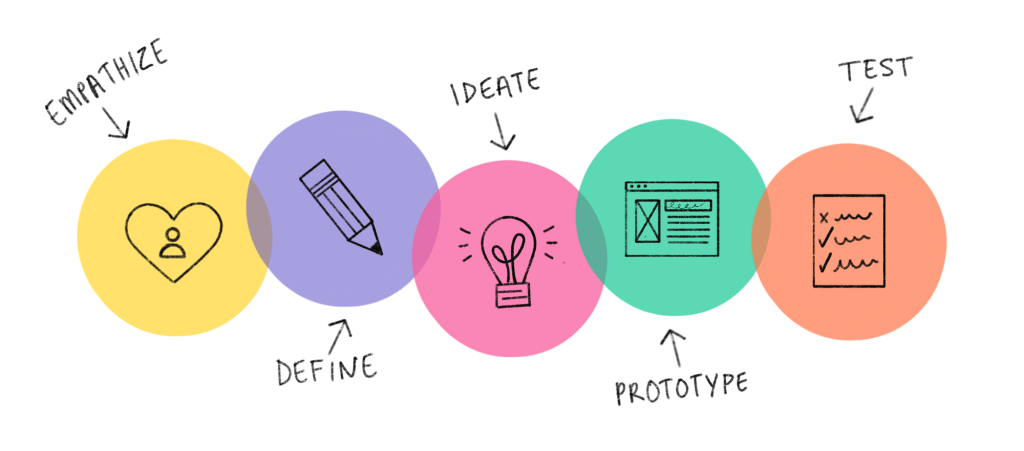
How Design Thinking Applies to You
| Design Step | Life Design Example |
|---|---|
| Empathize | What do I care about? What excites me? What drains me? |
| Define | What kind of life do I want to build? |
| Ideate | What are possible futures I could explore? |
| Prototype | What’s one small thing I could try now? (interview, job, research, club) |
| Test | What did I learn? Do I want to keep going this way? |
You don’t need to figure out everything right now. But you can start designing little experiments—mini-prototypes—that will help you learn more about yourself and your interests.
Reframing “Success” in Physics
❌ Success = Know exactly what you want to do from day one
✅ Success = Explore, try things, change your mind, ask questions, follow what energizes you
In this class, we’re not here to tell you what kind of physicist to be. We’re here to help you become the kind of physicist—or person—you want to be.
What We’ll Do This Semester
We’ll apply Design Thinking to:
- Learn what energizes us
- Talk to real scientists and physicists
- Try small “prototypes” of different paths
- Imagine multiple futures
- Make decisions with clarity and curiosity
- Build a support team
You are the designer of your physics life.
That’s not cheesy. That’s empowering. This is a design lab for your future. And I’m excited to explore it with you.
Click to go back to the Table of Contents
Activity: “Physics Origin Stories”

How did you end up deciding to major in physics?
Click to go back to the Table of Contents
What to Expect This Semester
🔍 What You’ll Be Doing in This Course
Over the semester, you’ll try out a few small but meaningful activities that help you explore who you are and where you might be headed. Here’s a quick look at what’s coming:
- 🔋 Energy Logs — You’ll track what parts of your week give you energy vs. what drains you. This helps you notice patterns about what really matters to you.
- 🗣️ Informational Interviews — You’ll talk to someone who’s further along in a physics-related path—like a professor, researcher, or alum—to learn how they got there and what their work is like.
- 🧭 Odyssey Planning — You’ll map out a few different possible “futures” for yourself—some realistic, some unexpected—so you can start designing your own path rather than waiting for one to appear.
- 🪞 Final Reflection: Designing My Physics Life — At the end of the course, you’ll look back at everything you explored and write (or record) a reflection about what you’ve learned about yourself and your future in physics.
You’ll do most of this through short weekly reflections and in-class activities. No tests, no grades—just thoughtful exploration.
🎤 Seminar Speakers: Why They Matter
Every other week, instead of our regular class meeting, you’ll attend a department seminar where a physicist or astronomer shares their work and their story.
These speakers might be:
- Researchers from other universities
- Physicists working in industry or government labs
- Faculty from our own department
- People with physics backgrounds doing unexpected things
Why are you attending these?
Because real people’s stories help you see what’s possible. You’ll hear how others found their way in physics—the twists, the pivots, the surprises—and how their values shaped their careers.
This isn’t just about hearing cool science (though you will). It’s about asking:
- Could I see myself doing something like that?
- What parts of their story connect to mine?
- What did they try before figuring out what was right for them?
You’ll reflect after each talk so you can build your own understanding of what excites you—and what doesn’t.
Click to go back to the Table of Contents
Exit Ticket
– One thing you’re excited about this semester
– One thing you’re nervous or uncertain about
Click to go back to the Table of Contents
🎯 Learning Goals Addressed This Week
- Goal 2: Explore a range of possible futures for yourself in physics and beyond
- Goal 5: Develop a strong foundation for navigating college and the physics major
- Goal 6: Communicate your evolving identity as a physics student
 Physics Education Research at UNG