Activity 2: Resistors in Series and Parallel
| Practice 7.1.1 |
|---|
In this example, this circuit has two resistors, with R1 > R2. Which of the two resistors dissipates the larger amount of power? (Remember that the power dissipated in a resistor can be calculated with either 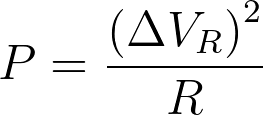 or or  ) ) |
| Practice 7.1.2 |
|---|
A 60 W light bulb and a 100 W light bulb are placed one after the other in a circuit. The battery’s emf is large enough that both bulbs are glowing. 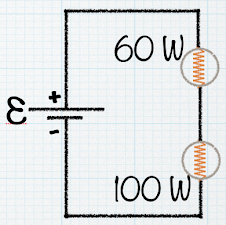 Which one glows more brightly? |
| Practice 7.1.3 |
|---|
This circuit has two resistors, with R1 > R2. 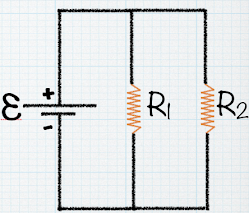 Which of the two resistors dissipates the larger amount of power? |
| Practice 7.1.4 |
|---|
A 60 W light bulb and a 100 W light bulb are placed one after the other in a circuit. The battery’s emf is large enough that both bulbs are glowing. 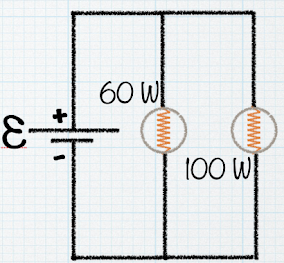 Which one glows more brightly? |
| Practice 7.1.5 |
|---|
What is the current through the 5 Ω resistor?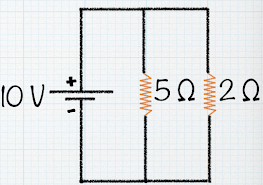 |
| Practice 7.1.6 |
|---|
| What is the current through the 2 Ω resistor? |
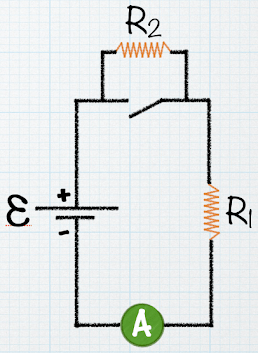
With the switch closed, there is no current in R2 because the current has an alternate zero-resistance path through the switch. There is current in R1 and this current is measured with the ammeter (a device for measuring current) at the bottom of the circuit. If the switch is opened, there is current in R2. What happens to the reading on the ammeter when the switch is opened?
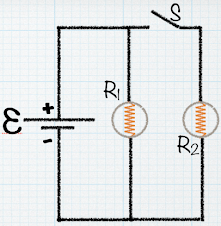
Two identical light bulbs are represented by the resistors R1 and R2 (R1 = R2). The switch S is initially open. I(before) is the current before the switch is closed and I(after) is the current after the switch is closed.
(a) What happens to the total current after the switch is closed? In other words, what is I(after) in terms of I(before)?
(b) If switch S is closed, what happens to the brightness of the bulb R1?

The three light bulbs in the circuit all have the same resistance of 1 Ω. Compare the brightness of bulb B to the brightness of bulb A. (brightness is proportional to power)

