
Principles of Physics II — PHYS 2212
Course Syllabus for Fall 2026
University of North Georgia’s College of Science & Mathematics
Department of Physics & Astronomy
Course Instructor

email: sarah.formica@ung.edu
Hours: Mon/Wed 1:00-3:00 PM
Hours: Tue/Fri by appointment, book your appointment here.
Office Hours
Booking an Appointment
Course Catalog Description
This is a calculus-based introduction to the fundamental laws of electricity, magnetism, optics, and modern physics. Credit will not be given to students who have credit for PHYS 2212H. Prerequisite: MATH 2460 with a grade of C or higher and PHYS 2211 and 2211L with a grade of C or higher or permission of instructor. Corequisite: PHYS 2212L. (3 credit hours)
Learning Goals
PHYS 2212 is the 2nd semester of introductory physics. We emphasize conceptual understanding and problem solving skills. We cover electricity, circuits, magnetism, electromagnetic waves, light, and optics: the foundations of our modern technological society. My goals are for you to continue developing knowledge and intuition about how the world works, to learn to approach, solve, and understand physics problems on both qualitative and quantitative levels, to relate classroom physics to the real world you live in, and to develop a deeper appreciation of the scientific method.
Respect for Diversity
I recognize that there is a vast untapped intellectual resource in all groups underrepresented in physics. For this reason, I am committed to making physics more accessible to everyone. It is my intent that students from all diverse backgrounds and perspectives be well served by this course, that students’ learning needs be addressed both in and out of class, and that the diversity that students bring to this class be viewed as a resource, strength, and benefit.
It is my intent to present materials and activities that are respectful of diversity: gender, sexuality, ability, age, socioeconomic status, ethnicity, race, and culture. The structure of this course — collaborative group work, ungrading, and multiple modes of demonstrating learning — is designed in part to reduce barriers that traditional lab courses can create for students from underrepresented groups.
Physics belongs to everyone. The scientists who will build public trust in science, communicate honestly across communities, and solve the problems ahead of us will come from all backgrounds. This course is designed with that in mind.
Your suggestions are encouraged and appreciated. Please let me know ways to improve the effectiveness of the course for you personally or for other students or student groups.
Required Texts and Materials
The textbook for this course is University Physics from OpenStax and is available online. If you prefer paperback you may purchase a copy with ISBN-13: 978-1-50669-816-8 (Volume 2) and ISBN-13: 978-1- 50669-825-0 (Volume 3)
All course materials will be accessed through UNG’s eLearning system, also known as D2L (Desire 2 Learn).
This course is taught primarily online using D2L. If you have any technical difficulties or maybe want to take a tutorial on using some of the technology, please go to https://ung.edu/remote-life/learning/index.php, which is UNG’s source of remote learning resources.
Course Schedule
| Learning Mode | Monday | Tuesday | Wednesday | Thursday | Friday |
|---|---|---|---|---|---|
| Online | Work through Before Class submodule on D2L | Oral Quizzes on Zoom 9:00-12:00 | Work through Before Class submodule on D2L | ||
| Classroom | Small group problem solving and Q&A session | Small group problem solving and Q&A session | Q&A session and Written Quizzes | ||
| Online | Work through After Class submodule on D2L | Oral Quizzes on Zoom 1:00-4:00 | Work through After Class submodule on D2L | Oral Quizzes on Zoom 1:00-3:00 | |
| Office hours | Rogers 116A 1:00-3:00 | Virtual Office Hours, by appointment | Rogers 116A 1:00-3:00 | Virtual Office Hours, by appointment |
Content Learning Objectives
Here are the key things you’ll learn in this course and why they’re important. Upon completion of this course students will be able to:

1. Apply Electrostatics: Analyze how electric charges interact through forces and fields, using tools such as Coulomb’s law, electric field concepts, electric potential, and Gauss’s law.
This will help you grasp how electric charges interact, which is fundamental to understanding all electrical phenomena.
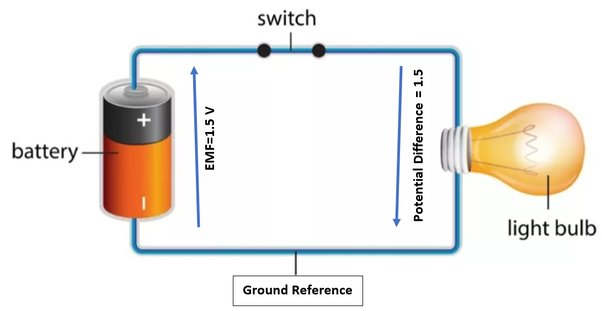
2. Analyze DC Circuits: Analyze the behavior of DC circuits, using tools such as Ohm’s law, Kirchhoff’s rules, and the charging/discharging behavior of capacitors in RC circuits.
You’ll learn how electricity flows in circuits, which is crucial for understanding all electronic devices.
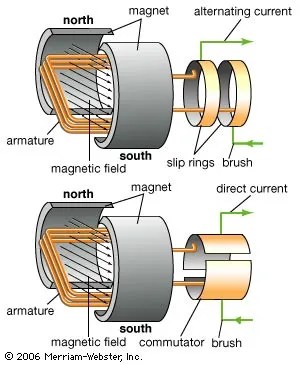
3. Calculate Magnetic Fields and Forces: Calculate magnetic forces and fields produced by electric currents, using tools such as the Lorentz force, the Biot-Savart law and Ampère’s law.
This knowledge is essential for understanding how motors, generators, and many other technologies work.

4. Explain Electromagnetic Induction: Explain how changing magnetic flux induces currents and voltages, using tools such as Faraday’s law, Lenz’s law, and motional EMF.
This skill is key to understanding how we generate and transmit electricity.
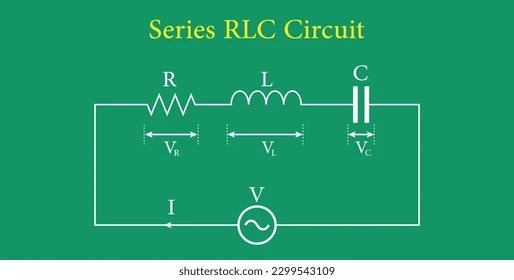
5. Analyze AC Circuits: Analyze the behavior of AC circuits, using tools such as impedance, reactance, and power calculations for resistors, capacitors, and inductors.
This knowledge is important for understanding how our power grid works and how many electronic devices operate.

6. Describe Electromagnetic Waves: Describe the properties, generation, and propagation of electromagnetic waves, using tools such as Maxwell’s equations to relate electricity, magnetism, and the speed of light.
This will help you understand how light, radio waves, and other types of radiation behave and are used in technology.

7. Solve Optics Problems: Solve problems involving reflection, refraction, and polarization of light, using tools such as Snell’s law, the law of reflection, and the Law of Malus.
These concepts determine how light bends and bounces between materials — the basis for how lenses, mirrors, and fiber optics direct light.

8. Interpret Wave Optics Phenomena: Interpret interference and diffraction patterns, using tools such as double-slit experiments and diffraction gratings.
These phenomena reveal the wave nature of light and underlies technologies like spectrometers and holography.
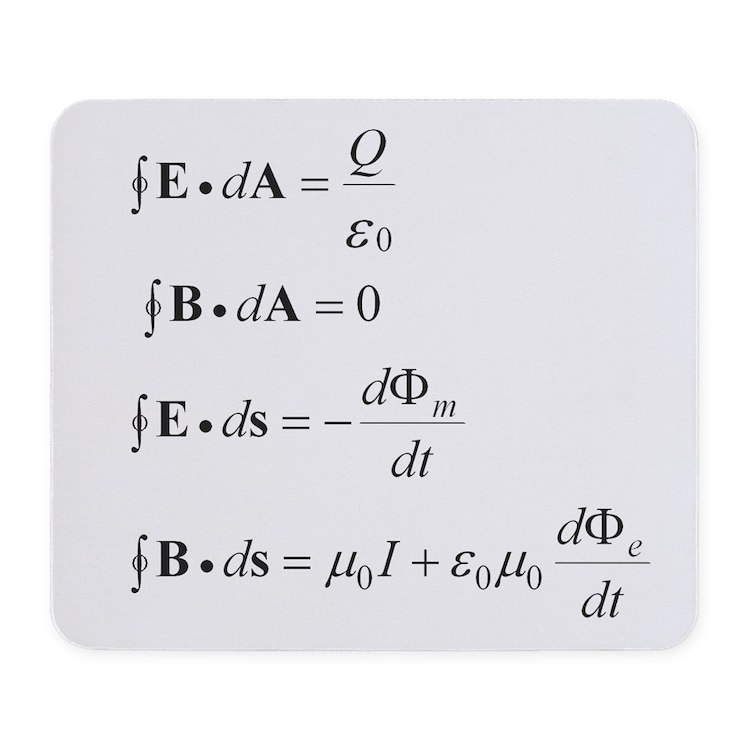
9. Apply Vector Calculus: Apply vector calculus tools, such as line integrals, surface integrals, and gradients, to describe and analyze electromagnetic phenomena throughout the course.
This mathematical skill is crucial for describing complex electromagnetic phenomena.

10. Connect Physics to Technology: Connect course concepts to real-world technologies, such as electric power generation and transmission, telecommunications, medical imaging (e.g., MRI), and consumer electronics.
This will help you see how the concepts you’re learning are used in everyday life and cutting-edge technologies.
These objectives are important because they form the foundation of modern physics and engineering. The principles you’ll learn are used in countless technologies, from smartphones to medical imaging devices. Understanding these concepts will give you valuable problem-solving skills and a deeper appreciation of the physical world around you.
(Un)Grading
The grading system in this course is likely very different from what you are used to. It is often called ungrading or going gradeless because it shifts the focus from letter grades to learning. Research shows that descriptive feedback — rather than grades or scores — leads to greater learning gains. Grades, by contrast, tend to reduce motivation, suppress creativity, promote competition over collaboration, and increase fear of failure. If you are interested, the article Teaching More by Grading Less (or Differently) offers a great overview of this research. These ideas are supported by scholars like Carol Dweck, whose book Mindset introduced the concept of growth mindset, and Daniel Pink, whose book Drive shows that extrinsic rewards and punishments often hinder creativity and deep thinking.
My goal is to foster a growth mindset and intrinsic motivation in all students.
Throughout the semester you will receive written and verbal feedback on your work. You will also have opportunities to assess your own work, respond to feedback, and revise your thinking — all of which has been shown to support deeper and more lasting learning.
Your final grade will be determined by the skills you develop, the learning objectives you demonstrate, and the honest appraisal you make of your own effort and progress. This course has ten learning objectives. Your grade proposal should make the case — with specific evidence from your body of work — that you have met these objectives at the level you are proposing.
Final Course Grade
The grade proposal is submitted during the final week of the semester. It is a written document or presentation in which you:
- Identify which learning objectives you have met and at what level
- Point to specific evidence from your coursework — such as problem sets, quizzes, written work, and group work
- Reflect honestly on where you struggled and what you learned from it
- Propose a final grade and explain why it is fair
You will have the agency to evaluate your learning and propose your final grade.
Use specific evidence from your coursework to demonstrate — not just assert — that you have met each objective. Saying “I mastered the quiz on Gauss’s Law” is not enough. Show me what you understand: explain a concept in your own words, walk through your reasoning on a problem, or describe what a result means physically. Reflect on what confused you and how your thinking changed. The goal is not to list what you did, but to show what you can do with what you learned.
Your instructor will review your proposal carefully and may respond with questions, feedback, or a counteroffer. A proposal that honestly acknowledges growth areas alongside strengths is more compelling than one that claims everything went perfectly.
Final Presentation Options
(Choose one)
You will propose your final grade through one of the following options, each limited to 20 minutes (for presentations) or 5 pages (for written work):
Zoom Interview: Meet with me via Zoom for a final exit interview. Present an organized case for your proposed grade, supported by evidence. I will offer feedback and we will discuss your grade together.
Recorded Video: Submit a 20-minute recorded presentation to D2L with evidence supporting your proposed grade.
Written Paper: Submit a written proposal (max 5 pages, single-spaced, 12-point font, 1-inch margins) to D2L that presents your case using evidence from your work.
In all cases, your proposed grade must be supported by your learning and progress. I reserve the right to veto any suggested grade.
Evidence of Learning
Your grade proposal should include strong evidence of your learning for all 10 learning objectives. Evidence can take many forms — the examples below are meant to illustrate possibilities, not to define the only acceptable approaches.
One common mistake is thinking that reciting a formula or defining what it means is sufficient demonstration of understanding. It is not. Anyone can memorize that F = qE relates force and electric field — that is not understanding, that is recall. Understanding means being able to use an idea: applying it to a problem you have not seen before, explaining why it makes physical sense, connecting it to something else you know, or describing what it predicts about the world. That is what your evidence should show.
Examples of evidence:
- A thorough and correct solution to a quiz problem, demonstrating mastery of a learning objective. Quizzes may be taken in written or oral format. To propose an A, you must demonstrate mastery of at least 13 quizzes.
It is required that you demonstrate mastery of at least 13 quizzes (written and/or oral) to propose an A.
- A reflection connecting a concept from lecture to an experiment you conducted in the co-requisite lab — describing what the concept means, what the lab revealed about it, and any obstacles you overcame in understanding it.
- Thorough and correct solutions to practice problems or in-class activities, strengthened by a brief reflection describing what you learned and how your thinking developed.
In all cases, your evidence should demonstrate understanding, not just completion. A correct answer with no explanation of your reasoning is weaker evidence than one that shows how you arrived at it and what it means.
Self-Assessment Practice Problems
Toward the end of a module, you will come to a list of 10 Self-assessment Practice Problems which can be used to measure your learning outcomes. These problems will not be graded, but you will be able to check your final answer with an answer key.
For every problem, you are required to use the Problem-Solving Checklist to guide your approach. This process is designed to help you develop critical self-assessment skills by identifying errors, refining your strategies, and learning from your mistakes. Your work on these practice problems will serve as a record of your progress and provide valuable insights into your learning process. Consistently following these steps will not only improve your problem-solving abilities but also deepen your understanding of the course material. Make sure to complete the checklist for every assigned problem.
When you are ready to demonstrate your learning of the module’s content, you can take a quiz which will consist of one of these practice problems. You will have the choice to take this quiz in either a written or oral format.
Quizzes
Written quizzes are administered in class on Fridays and must be completed within 30 minutes. No notes or reference materials are permitted. A calculator will be provided by the physics department — personal calculators are not allowed.
Oral quizzes will be administered via Zoom on Tuesdays between 9:00 AM — 4:00 PM and Fridays between 1:00 — 3:00 PM. You will have 10 minutes to complete the oral quiz. You are allowed to use your own notes and reference materials during this oral quiz. I will listen to your solution and may ask follow-up questions about your solution.
When you take a quiz, one of the Self-Assessment Practice Problems will be randomly chosen for you to solve. It is expected that you will have already worked through and solved all the practice problems so you will be adequately prepared for this quiz.
You are limited to taking only two quizzes per week. This is to ensure that you stay on track and don’t get behind.
Here’s how quizzes work in this course:
You’ll have 14 quizzes total. You need to do at least 7 oral quizzes over Zoom and 7 written quizzes in the classroom on Fridays.
You get to decide when to take each quiz and whether it’s oral or written, as long as you stick to these rules. Want to do an oral quiz? Just book a Zoom appointment with me. For a written quiz, come to class on Friday – no appointment needed.
I’m here to help you succeed, so don’t hesitate to reach out if you have any questions about the quiz system or need any clarification. Let’s work together to make sure you’re on track!
Quiz Retakes
With this (un)grading system, learners are allowed the time and flexibility to focus on mastering a learning outcome rather than achieving a certain number or letter grade. In this system, you — the learners — are given the flexibility to choose how you demonstrate mastery and you have the chance to attempt mastery as many times as necessary. With more choice in your learning, you can take the reins and drive your learning journey with student agency.
With this in mind, you are given the opportunity to retake a quiz if you did not master it on your first try. The quiz retake will be one problem from the self-assessment practice problems but it won’t necessarily be the same problem you had the first time. Quiz retakes can be administered in either format, written or orally.
If you retake a quiz but do not master it, you can retake it again.
Problem-Solving Checklist
For every problem, you are required to use the Problem-Solving Checklist to guide your approach.
1. Understand the Problem
- What is the problem asking you to do?
- What principles or concepts do you think apply here? Why?
- What information do you have, and what do you need to find?
2. Plan Your Approach
- Outline your strategy for solving the problem.
- Choose the best method or formula and justify why it’s appropriate. Why did you choose this approach over others?
- Consider any assumptions or simplifications needed.
3. Execute the Solution
- Solve the problem step by step, showing all your work clearly.
- Pay attention to units, significant figures, and logical flow.
- Double-check calculations and intermediate steps as you go
4. Reflect on Initial Results
- Does your solution seem reasonable? Why or why not?
- Compare your answer with expectations or known results (e.g., units, order of magnitude).
5. Identify and Address Errors
- Look for mistakes or gaps in your reasoning or calculations. How did you identify and correct these errors?
- Revise your approach as needed to correct these errors.
- Ask yourself: How can I improve this solution?
6. Iterate and Improve
- Update your solution based on insights from your reflection.
- Test your revised approach and verify if it works better.
- Document what you learned from the iteration process.
7. Connect and Reflect
- What did you learn from solving this problem?
- How does this problem relate to broader concepts or other problems?
- What would you do differently next time when solving a similar problem?
- Are there areas where you need more practice or clarification?
Attendance Policy
Attendance is strongly encouraged.
This course is structured as a hybrid learning experience, meaning that a significant portion of the work — reading, problem-solving, and self-assessment — happens outside of class time. Class sessions are designed to help you get the most out of that independent work by providing opportunities to:
- Collaborate with your peers to make sense of challenging material
- Get real-time feedback and support from me and our Learning Assistants
- Ask questions and get help on problems you may be stuck on
- Deepen your understanding through discussion and guided practice
Attendance and Exit Tickets
Attendance is required to complete in-class Exit Tickets, which are brief end-of-class self-assessments completed on Mondays and Wednesdays. Exit Tickets are accessible only during class via a password shared at the end of the period. There are 30 Exit Tickets total; completing at least 25 is required to be eligible to propose a final grade of A. Meeting this threshold does not guarantee an A and must be supported by evidence of learning in your final grade proposal.
Exit Tickets support learning by helping you regularly assess what you understand, what is still unclear, and how your understanding is developing over time.
Exit Ticket FAQ
What if I miss class?
If you are not in class, you will not have access to that day’s Exit Ticket. Occasional absences are expected, which is why you do not need to complete all 30 Exit Tickets.
Why 25 Exit Tickets for an A?
Proposing an A requires consistent engagement and evidence of self-assessment across the semester. Completing at least 25 Exit Tickets demonstrates sustained participation in this learning practice.
Does completing 25 Exit Tickets mean I automatically earn an A?
No. Completing 25 Exit Tickets only makes you eligible to propose an A. Your final grade proposal must include evidence that your learning meets the course criteria for that grade.
What if I attend class but forget to submit the Exit Ticket?
Exit Tickets are intended to be completed during the final minutes of class, but you may submit them any time before midnight on the day of class. Be sure to write down the password shared at the end of class so you can access the Exit Ticket later if needed. After midnight, the Exit Ticket will close and count as not completed.
Important Note about Quizzes: Written quizzes will be administered in class on Fridays. You must be present in class to take a quiz. Make-up quizzes will only be offered in cases of documented illness, emergencies, or other approved university-excused absences.
Academic Honesty
The work you produce in this course should reflect your own thinking, effort, and understanding. Cheating, plagiarism, and misrepresentation — including copying others’ work or misusing AI tools — undermine your learning and the integrity of the scientific community you are joining. In a course built around honest communication of evidence, academic dishonesty is a particular contradiction.
I support the thoughtful use of AI tools as part of the learning process. Used well, AI can help you brainstorm, clarify your thinking, revise your writing, or explore ideas. But the key word is thoughtful. You are responsible for ensuring that your work reflects your own ideas and comprehension, that you acknowledge any AI assistance transparently, and that you do not use AI to replace your own thinking or bypass the intent of an assignment.
Transparent acknowledgment looks like this: a brief note at the end of your work stating what tool you used and how — for example, “I used Claude to help me understand a concept before working through the problem myself” or “I used ChatGPT to check my reasoning and then revised my approach.” This mirrors how scientists acknowledge tools, collaborators, and resources in their work. It is not a penalty — it is honest attribution.
If you are unsure whether a particular use of AI is appropriate, ask. Engaging responsibly with powerful tools — knowing when they help and when they get in the way of your own growth — is itself a skill worth developing.
Note: I used Claude to help draft and revise this policy statement. This is one example of how AI can be used transparently and responsibly in support of meaningful work.

