Principles of Physics II Course Learning Objectives
and why they matter.
Welcome to our calculus-based physics course on electricity, magnetism, light, and optics. Here are the key things you’ll learn in this course and why they’re important.
Upon completion of this course students will:
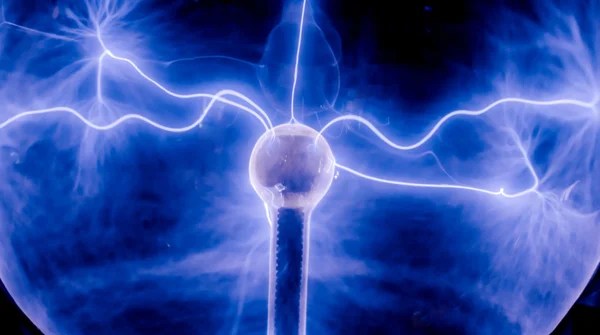
1. Apply Electrostatics: Analyze how electric charges interact through forces and fields, using tools such as Coulomb’s law, electric field concepts, electric potential, and Gauss’s law.
This will help you grasp how electric charges interact, which is fundamental to understanding all electrical phenomena.
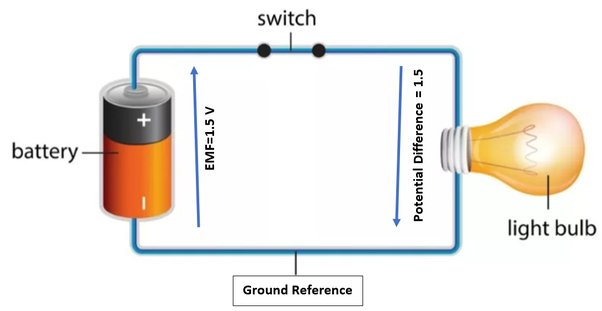
2. Analyze DC Circuits: Analyze the behavior of DC circuits, using tools such as Ohm’s law, Kirchhoff’s rules, and the charging/discharging behavior of capacitors in RC circuits.
You’ll learn how electricity flows in circuits, which is crucial for understanding all electronic devices.

3. Calculate Magnetic Fields and Forces: Calculate magnetic forces and fields produced by electric currents, using tools such as the Lorentz force, the Biot-Savart law and Ampère’s law.
This knowledge is essential for understanding how motors, generators, and many other technologies work.
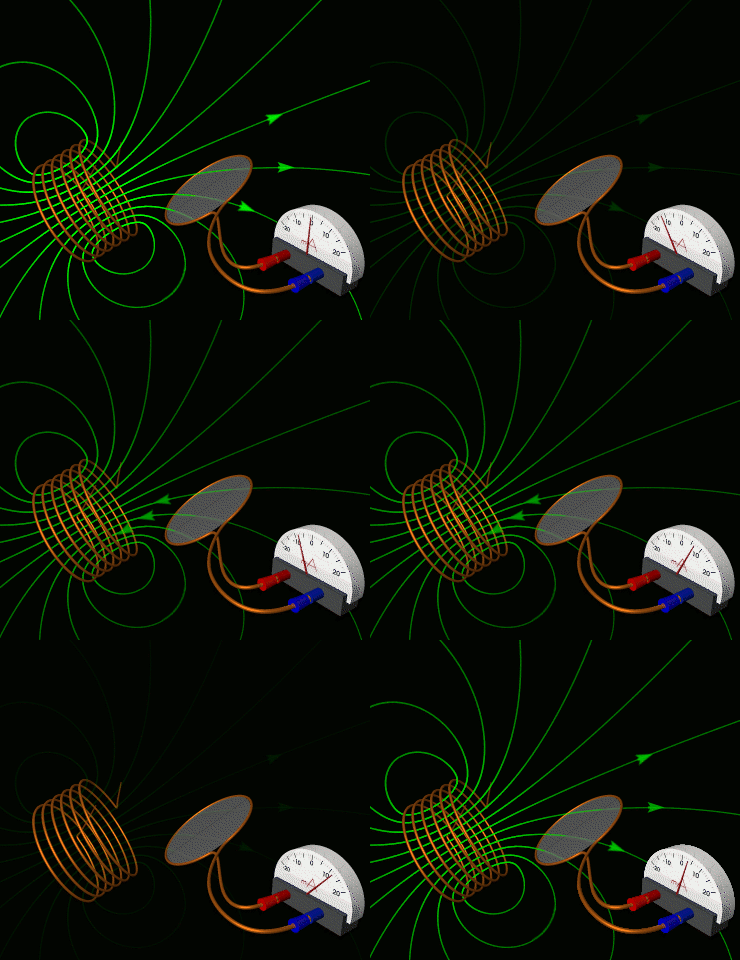
4. Explain Electromagnetic Induction: Explain how changing magnetic flux induces currents and voltages, using tools such as Faraday’s law, Lenz’s law, and motional EMF.
This skill is key to understanding how we generate and transmit electricity.

5. Analyze AC Circuits: Analyze the behavior of AC circuits, using tools such as impedance, reactance, and power calculations for resistors, capacitors, and inductors.
This knowledge is important for understanding how our power grid works and how many electronic devices operate.

6. Describe Electromagnetic Waves: Describe the properties, generation, and propagation of electromagnetic waves, using tools such as Maxwell’s equations to relate electricity, magnetism, and the speed of light.
This will help you understand how light, radio waves, and other types of radiation behave and are used in technology.
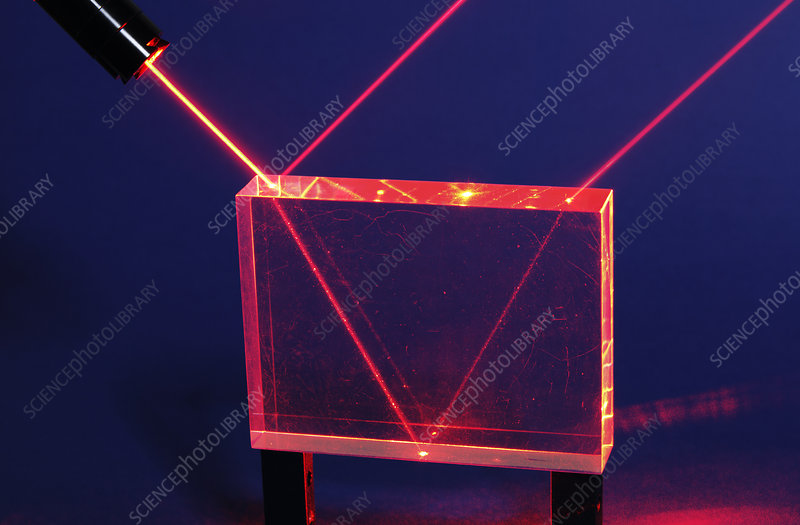
7. Solve Optics Problems: Solve problems involving reflection, refraction, and polarization of light, using tools such as Snell’s law, the law of reflection, and the Law of Malus.
These concepts determine how light bends and bounces between materials — the basis for how lenses, mirrors, and fiber optics direct light.

8. Interpret Wave Optics Phenomena: Interpret interference and diffraction patterns, using tools such as double-slit experiments and diffraction gratings.
These phenomena reveal the wave nature of light and underlies technologies like spectrometers and holography.

9. Apply Vector Calculus: Apply vector calculus tools, such as line integrals, surface integrals, and gradients, to describe and analyze electromagnetic phenomena throughout the course.
This mathematical skill is crucial for describing complex electromagnetic phenomena.

10. Connect Physics to Technology: Connect course concepts to real-world technologies, such as electric power generation and transmission, telecommunications, medical imaging (e.g., MRI), and consumer electronics.
This will help you see how the concepts you’re learning are used in everyday life and cutting-edge technologies.
These objectives are important because they form the foundation of modern physics and engineering. The principles you’ll learn are used in countless technologies, from smartphones to medical imaging devices. Understanding these concepts will give you valuable problem-solving skills and a deeper appreciation of the physical world around you.

