Modern Physics Course Learning Objectives
and why they matter.
Welcome to Modern Physics. Here are the key things you’ll learn in this course and why they’re important.
Upon completion of this course students will:

1. Apply Special Relativity: Apply the postulates of special relativity and Lorentz transformations to analyze and calculate the behavior of objects and systems moving at high speeds.
Why: Special relativity changed how we understand space, time, and motion — not as intuitive concepts but as quantities that depend on the observer. That shift in thinking is one of the most radical in the history of science, and understanding it is essential for anyone who wants to grasp how the universe actually works. It also underpins technologies that billions of people rely on every day, from GPS to particle accelerators, without knowing the physics that makes them possible.
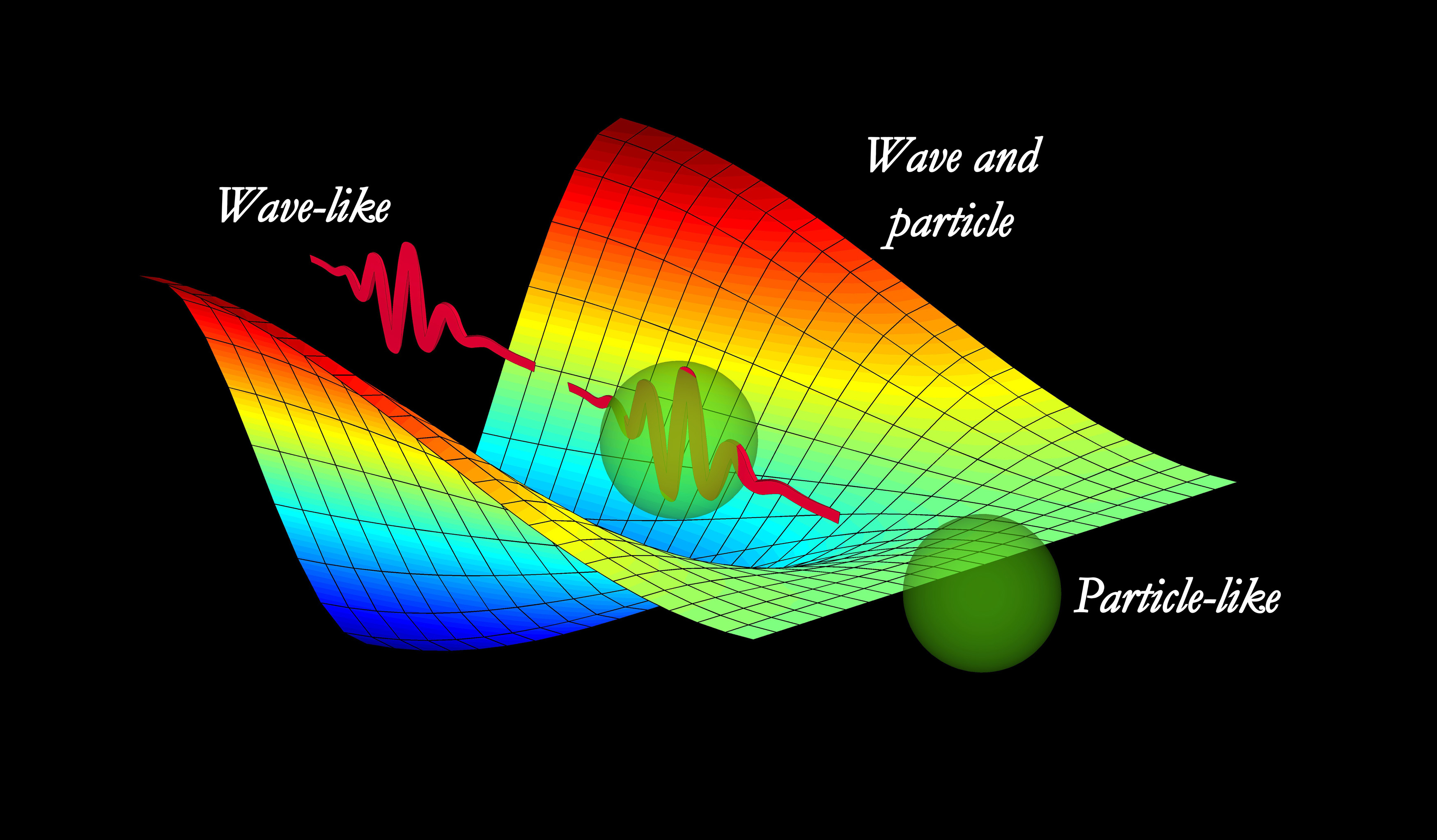
2. Analyze Wave-Particle Duality: Evaluate the experimental evidence for wave-particle duality and apply quantum concepts — such as de Broglie wavelengths and the photoelectric effect — to solve problems.
Wave-particle duality is one of the most counterintuitive ideas in all of science — that light and matter are neither purely waves nor purely particles, but something else entirely that we are still learning to describe. Understanding it means understanding how physicists build knowledge from experimental evidence, even when that evidence defies common sense. It also underpins the technologies that define modern life, from semiconductors and lasers to the emerging field of quantum computing.

3. Solve Schrödinger Equation Problems: Solve the Schrödinger equation for simple quantum systems — such as particles in a box or quantum harmonic oscillators — to determine wave functions and energy levels.
Why: The Schrödinger equation is the mathematical heart of quantum mechanics — the tool that lets physicists move from physical intuition to precise, testable predictions about how quantum systems behave. Learning to solve it for simple systems builds the foundation for understanding more complex ones, and develops the kind of mathematical reasoning that is essential for anyone working at the frontier of physics, chemistry, or materials science.

4. Explain Atomic Structure: Explain the quantum mechanical model of the hydrogen atom — including aspects such as quantum numbers, orbital shapes, and the Zeeman effect — and connect it to the spectral observations that motivated its development.
Why: The quantum mechanical model of the hydrogen atom was not invented from scratch — it was built to explain something scientists could see but not yet understand: the discrete lines of light emitted by hydrogen gas. Learning this model means learning how physicists use experimental observations to constrain and build theory, and why the model looks the way it does. It also provides the foundation for understanding chemical bonding, atomic spectra, and the behavior of all matter.

5. Interpret Molecular Behavior: Apply quantum mechanical principles to analyze the behavior of molecules — including aspects such as bonding, spectra, and the properties of molecular solids.
Why: Molecules are where quantum mechanics meets the physical world in ways we can see, touch, and measure. Understanding how quantum principles govern molecular bonding and spectra explains why materials behave the way they do — why some are rigid and others flexible, why some absorb light and others transmit it, why some conduct electricity and others don’t. These ideas connect physics to chemistry, biology, and materials science in ways that matter for medicine, energy, and technology.

6. Characterize Band Theory and Semiconductors: Use band theory to explain the electrical behavior of materials and devices — such as distinguishing conductors, semiconductors, and insulators, or explaining how doping modifies semiconductor behavior.
Why: Every electronic device you use — your phone, your laptop, the sensors in your car — depends on the quantum mechanical behavior of electrons in solid materials. Band theory is the framework that explains why some materials conduct electricity and others don’t, and how we can engineer that behavior by introducing impurities. Understanding it means understanding the physics behind one of the most consequential technologies in human history, and the principles that will drive the next generation of devices.
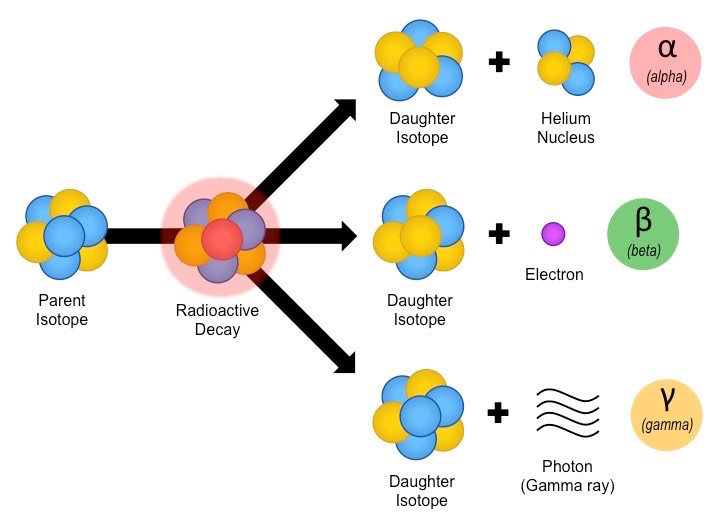
7. Evaluate Nuclear Properties: Interpret nuclear stability and explain the experimental evidence for nuclear phenomena — such as radioactive decay — and their applications.
Why: The nucleus of an atom stores an almost incomprehensible amount of energy, and understanding why requires grappling with the forces that hold it together and the processes by which it can come apart. Nuclear physics is not just abstract theory — it shapes decisions about energy policy, medical treatment, and public safety that affect everyone. A scientist who understands nuclear stability and radioactive decay is better equipped to contribute to those conversations honestly and clearly.

8. Apply Concepts of Nuclear Reactions: Explain the principles of nuclear fission and fusion, and evaluate their significance in real-world contexts — such as energy production, medical technology, or their biological effects.
Why: Nuclear fission and fusion are at the center of some of the most consequential questions facing humanity — how we power our civilization, how we treat cancer, how stars live and die. Understanding the physics of these reactions means being able to engage with those questions as a scientist rather than a bystander. As fusion energy moves closer to becoming a practical reality, the scientists who understand it will be the ones shaping how it is developed, communicated, and used.

9. Discuss Particle Physics: Evaluate the Standard Model as a framework for understanding matter and energy — applying concepts such as conservation laws and quark structure to analyze particle interactions.
Why: The Standard Model is one of the most successful scientific theories ever constructed — a framework that describes the fundamental building blocks of matter and the forces that govern their interactions, tested to extraordinary precision over decades of experimentation. Understanding it means understanding how physicists build and test theories at the most fundamental level, and what it means for a scientific framework to be powerful, predictive, and yet still incomplete. Particle physics also drives technologies we rely on every day, from medical imaging to the World Wide Web, which was invented at CERN to help physicists share data.
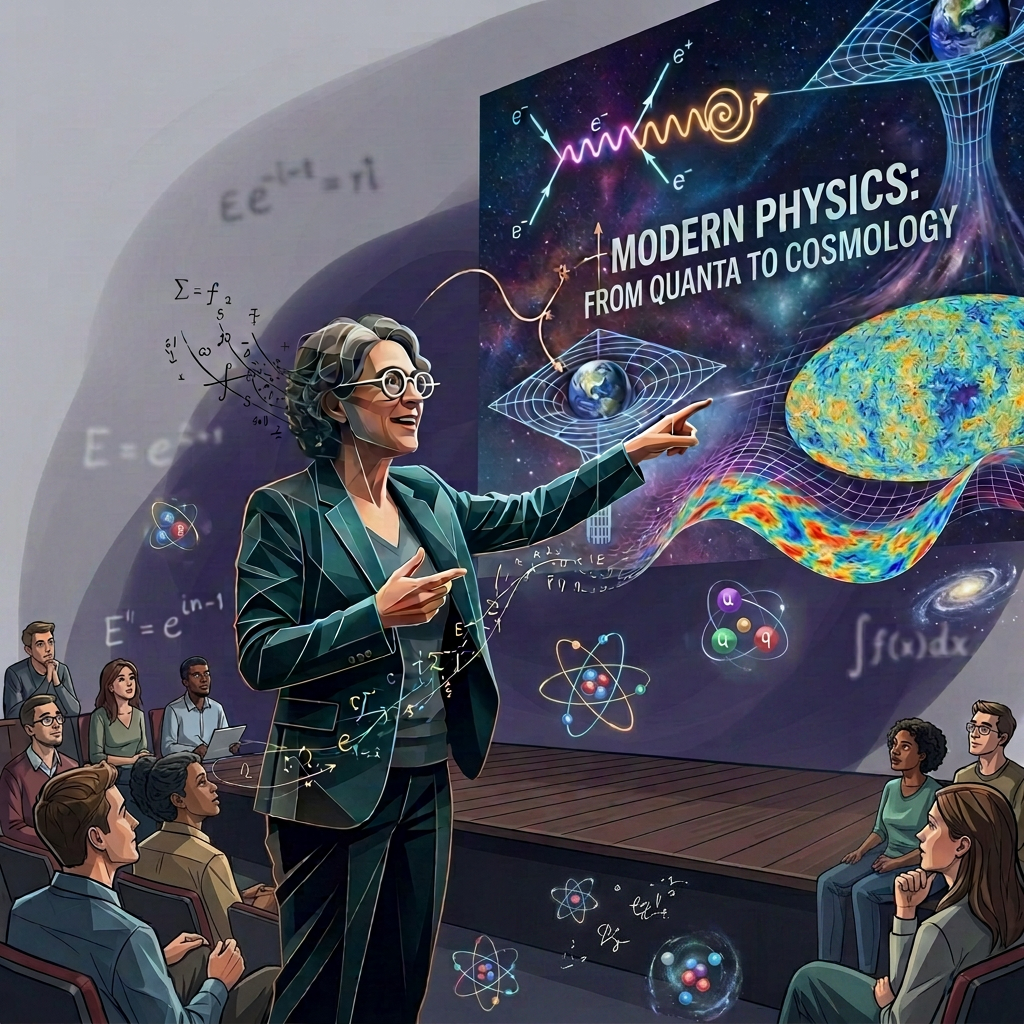
10. Communicate Modern Physics: Explain a modern physics concept clearly to a non-specialist audience and reflect on what that experience reveals about your own understanding of the physics.
Why: A physicist who can only explain their work to other physicists is only half as useful as one who can explain it to anyone. The ability to translate complex ideas into language a non-scientist can understand — and to reflect honestly on where that translation breaks down — is a skill that takes practice and reveals as much about your own understanding as it does about your audience. This is what it means to truly understand something — not just to solve the equations, but to be able to share the idea with anyone who is curious about it.
These objectives matter because modern physics is not just a collection of equations and models — it is a way of understanding the world that has transformed how we live, how we communicate, how we treat disease, and how we generate energy. The concepts you will encounter in this course sit at the foundation of nearly every technology that defines contemporary life, and at the frontier of questions we have not yet answered. But beyond the content, this course asks something more of you: to develop the habits of mind of a scientist — to ask how we know what we know, to evaluate evidence carefully, to hold your conclusions with appropriate confidence, and to share what you learn with the world around you. Physics done well is not just good science. It is a contribution to the broader human project of understanding where we are and how things work.

