PHYS 3310 Module 12 Self Assessment Practice Problems
Module 12 Self Assessment Practice Problems
12.1
Give the symbol for the following:
(a) the isotope of helium with mass number 4
(b) the isotope of tin with 66 neutrons
(c) an isotope with mass number 235 that contains 143 neutrons
Answer:
12.2
(a) Compute the approximate nuclear radius of carbon (A = 12), germanium (A = 70), and bismuth (A = 209).
(b) Compute the density of a typical nucleus.
(c) Find the resultant mass if we could produce a nucleus with a radius of 1 cm.
Answer: (a) 2.7 fm, 4.9 fm, 7.1 fm (b) 2 × 10¹⁷ kg∕m3 (c) 8 × 10¹¹ kg
12.3
The most common kind of iron nucleus has mass number A = 56. Find the radius, approximate mass, and approximate density of the nucleus.
Answer: 9.3 x 10⁻²⁶ kg, 4.1 x 10-43 m3, 2.3 x 10¹⁷ kg/m3
12.4
Find the mass defect, the total binding energy, and the binding energy per nucleon of , which has the highest binding energy per nucleon of all nuclides. The neutral atomic mass of is 61.928345 u.
Answer: 0.585365 u, 545.3 MeV, 8.795 MeV/nucleon
12.5
How much energy would be released if six hydrogen atoms and six neutrons were combined to form 12C?
Answer: 92.4 MeV
12.6
209Bi is the heaviest stable nuclide, and its Binding Energy per Nucleon (BEN) is low compared with medium-mass nuclides. Calculate BEN for this nucleus and compare it with the approximate value obtained from the graph in Figure 10.7.
Answer:
12.7
The half-life of strontium-91, 91Sr is 9.70 h. Find
(a) its decay constant
(b) for an initial 1.00-g sample, the activity after 15 hours.
The isotope 57Co decays by electron capture to 57Fe with a halflife of 272 days. The 57Fe nucleus is produced in an excited state, and it almost instantaneously emits gamma rays that we can detect.
(a) Find the mean lifetime and decay constant for 57Co.
(b) If the activity of a 57Co radiation source is now 2.00 µCi, how many 57Co nuclei does the source contain?
(c) What will be the activity after one year?
Answer: (a) 392 days, 2.95 x 10⁻⁸ s-1 (b) 2.51 x 10¹² (c) 0.788 µCi
12.9
Before 1900 the activity per unit mass of atmospheric carbon due to the presence of 14C averaged about 0.255 Bq per gram of carbon.
(a) What fraction of carbon atoms were 14C?
(b) In analyzing an archaeological specimen containing 500 mg of carbon, you observe 174 decays in one hour. What is the age of the specimen, assuming that its activity per unit mass of carbon when it died was that average value of the air?
Answer: 8020 y
12.10
World War II aircraft had instruments with glowing radium-painted dials. The activity of one such instrument was 1.0 × 10⁵ Bq when new.
(a) What mass of 226Ra was present?
(b) After some years, the phosphors on the dials deteriorated chemically, but the radium did not escape. What is the activity of this instrument 57.0 years after it was made?
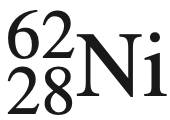 , which has the highest binding energy per nucleon of all nuclides. The neutral atomic mass of
  Physics Education Research at UNG