Photoelectric Effect

3.2 Photoelectric Effect
Learning Objectives
- Describe physical characteristics of the photoelectric effect
- Explain why the photoelectric effect cannot be explained by classical physics
- Describe how Einstein’s idea of a particle of radiation explains the photoelectric effect
| Practice 3.2.1 |
|---|
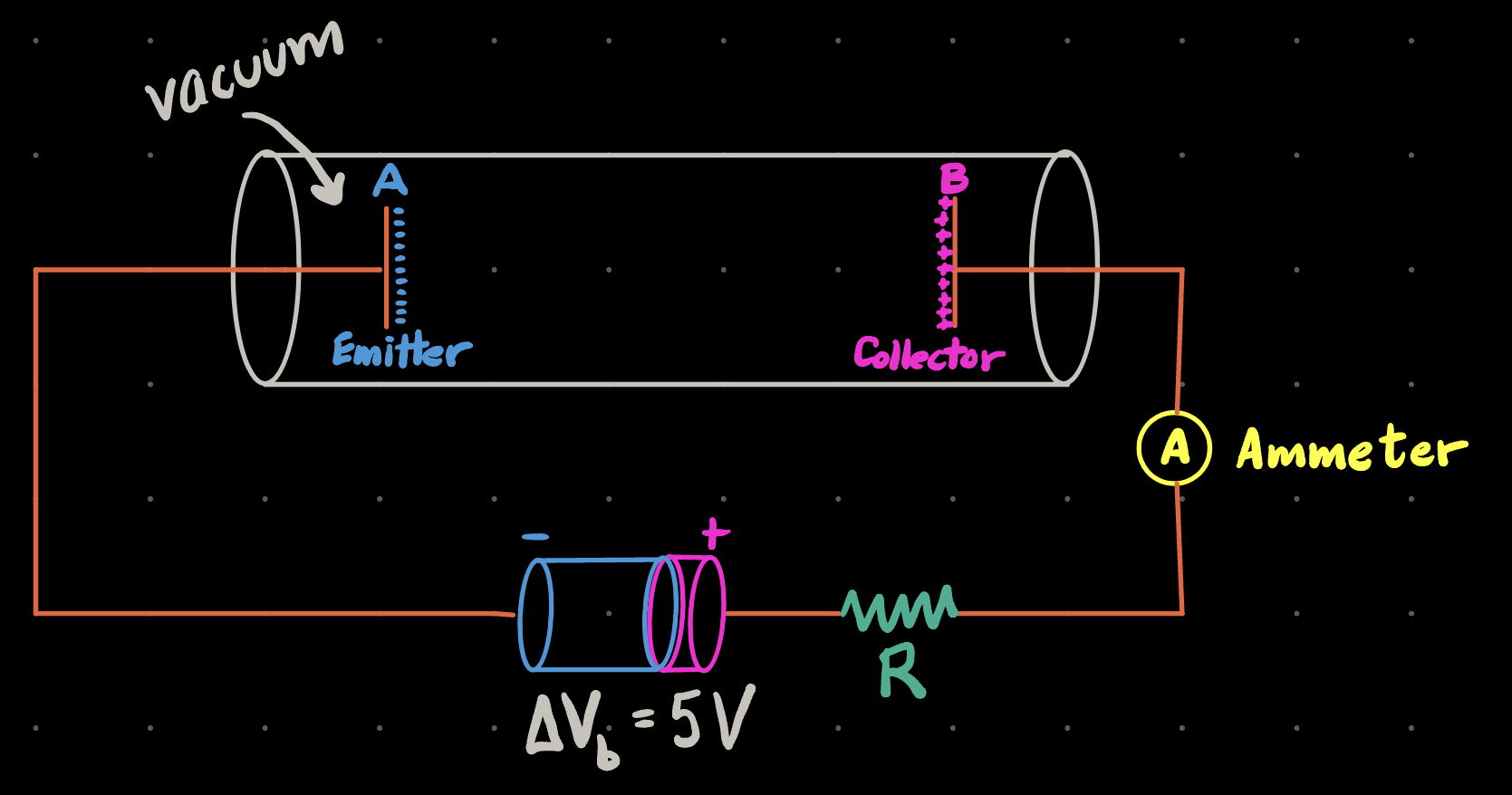 The battery voltage is 5 V. What is the potential difference between A (the emitter) and B (the collector)? |
| A. 0 V |
| B. 5 v |
| C. 50 V |
| D. impossible to determine |
| Practice 3.2.2 |
|---|
What is the direction of the Electric Field between A and B? |
| A. to the right, from A to B |
| B. to the left, from B to A |
| C. E = 0 between A and B |
| D. impossible to determine |
| Practice 3.2.3 |
|---|
 What would happen if you placed a free electron near A? |
| A. the electron would move at a constant speed from A to B |
| B. the electron would accelerate from A to B |
| C. the electron would remain at rest at A |
| D. impossible to determine |
| Practice 3.2.4 |
|---|
How much kinetic energy will the free electron have when it gets to B? |
| A. 0 eV |
| B. 5 eV |
| C. 50 eV |
| D. impossible to determine |
| Practice 3.2.5 |
|---|
 Remove the free electron. The potential difference between A and B is 5 V and the resistor has 10 ohms of resistance. What is the current from A to B? |
| A. 0 A |
| B. 5 A |
| C. 50 A |
| D. 0.5 A |
| E. impossible to determine |
| Practice 3.2.6 |
|---|
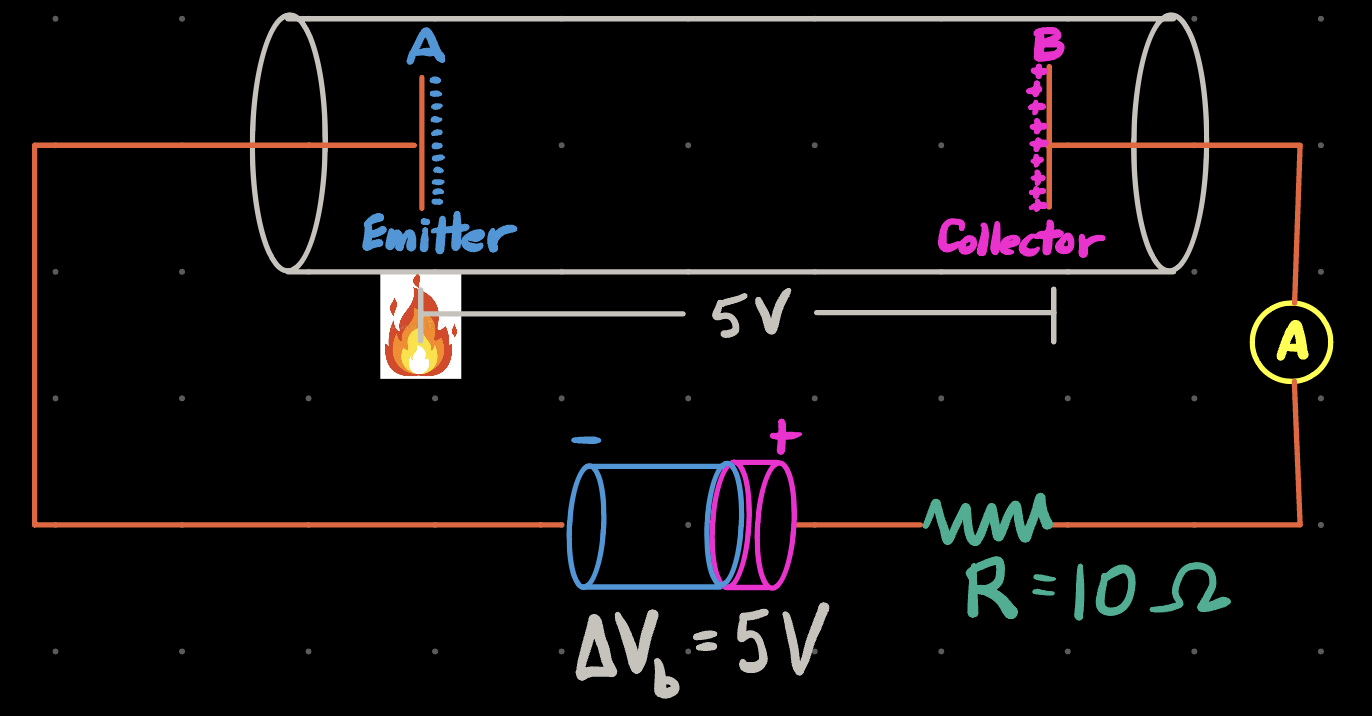 Heat up plate A until it’s just hot enough to barely “burn off” some electrons. (This is called thermionic emission.) What will a graph of current vs. voltage look like? |
A. 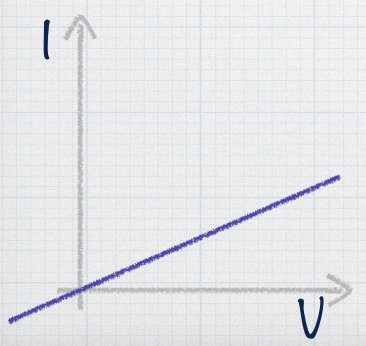 |
B.  |
C.  |
D. 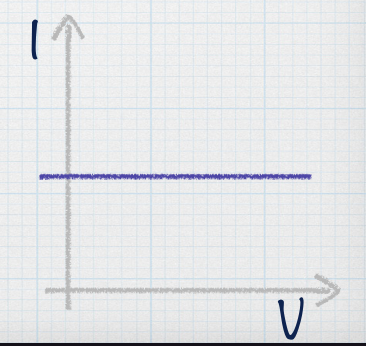 |
| E. something else |
Photoelectric Effect Experiment, Part 1
| Practice 3.2.7 |
|---|
| Which graph represents low (purple) and high (orange) intensity curves? |
A. 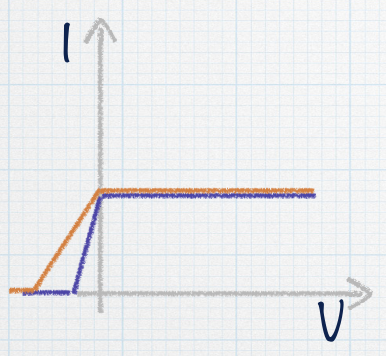 |
B. 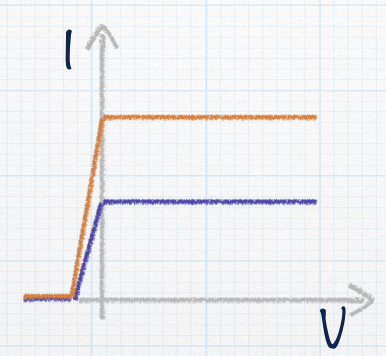 |
C.  |
D. 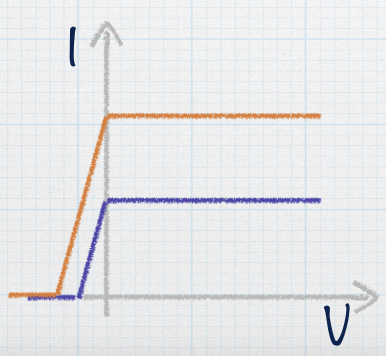 |
E. 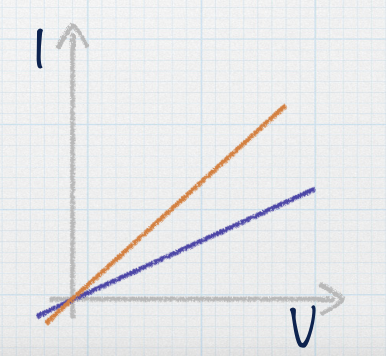 |
Photoelectric Effect Experiment, Part 2
| Practice 3.2.8 |
|---|
| Which graph represents longer (purple) and shorter (orange) wavelengths? |
| A. |
| B. |
| C. |
| D. |
| E. |
Photoelectric Effect Experiment, Part 3
| Practice 3.2.9 |
|---|
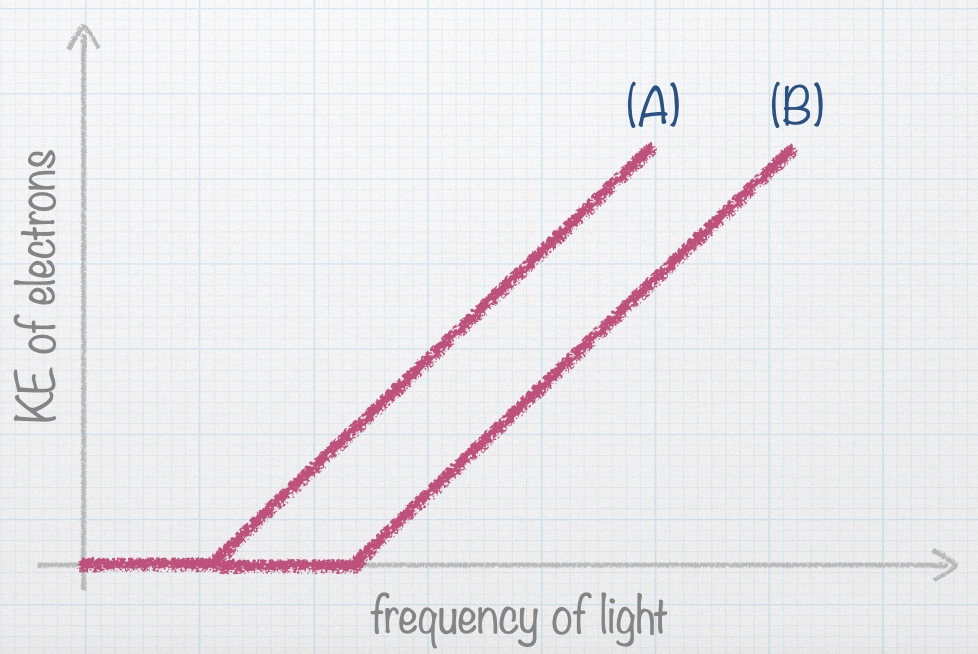 Which metal (A or B) has the larger work function? |
| A. metal A |
| B. metal B |
| C. the two metals have the same work function |
| D. impossible to determine |
| Practice 3.2.10 |
|---|
| Which of the following energy diagrams correctly describes the photoelectric effect? (Eb is the binding energy, or the work function) |
A. 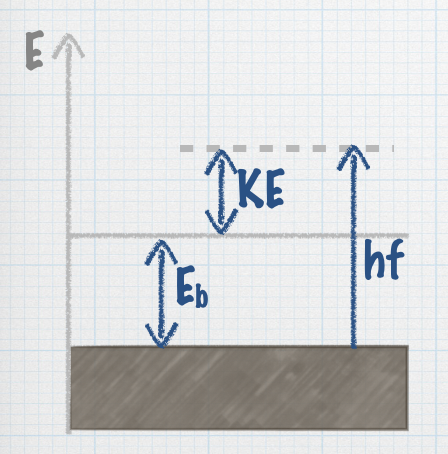 |
B. 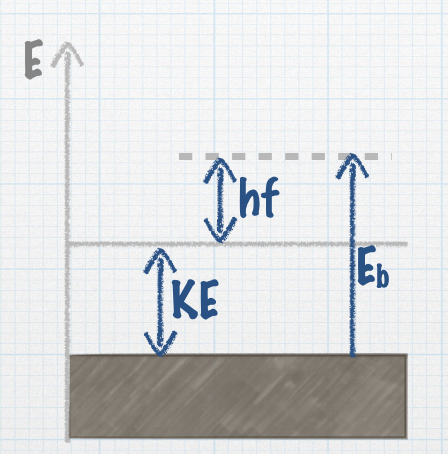 |
C.  |
 Physics Education Research at UNG