Modern Physics Laboratory — PHYS 3310L
Course Details for Fall 2026
University of North Georgia’s College of Science & Mathematics
Department of Physics & Astronomy
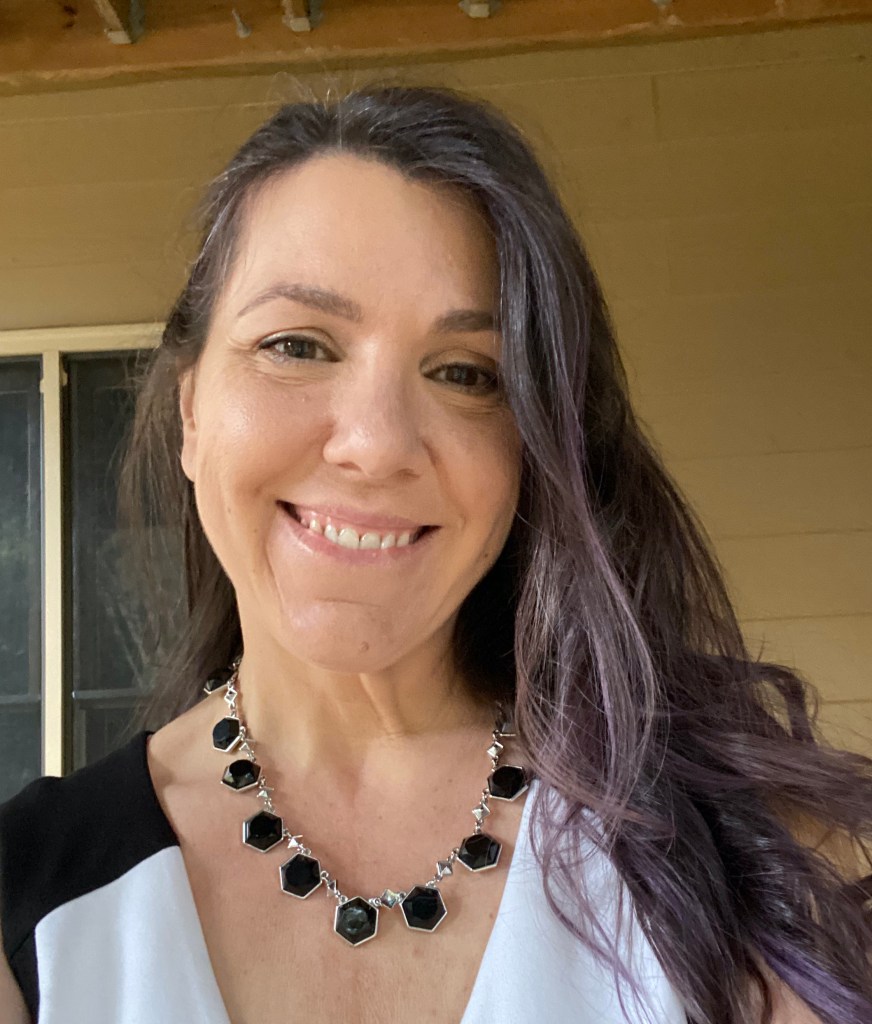
Course Instructor
email: sarah.formica@ung.edu
Hours: Mon/Wed 1:00-3:00 PM
Hours: Tue/Fri by appointment, book your appointment here.
Office Hours
Booking an Appointment
Course Catalog Description
Laboratory to accompany PHYS 3310. A selection of modern physics experiments to complement the topics in PHYS 3310. One 2-hour laboratory per week. (1 credit hour)
Respect for Diversity
I recognize that there is a vast untapped intellectual resource in all groups underrepresented in physics. For this reason, I am committed to making physics more accessible to everyone. It is my intent that students from all diverse backgrounds and perspectives be well served by this course, that students’ learning needs be addressed both in and out of class, and that the diversity that students bring to this class be viewed as a resource, strength, and benefit.
It is my intent to present materials and activities that are respectful of diversity: gender, sexuality, ability, age, socioeconomic status, ethnicity, race, and culture. The structure of this course — collaborative group work, ungrading, and multiple modes of demonstrating learning — is designed in part to reduce barriers that traditional lab courses can create for students from underrepresented groups.
Physics belongs to everyone. The scientists who will build public trust in science, communicate honestly across communities, and solve the problems ahead of us will come from all backgrounds. This course is designed with that in mind.
Your suggestions are encouraged and appreciated. Please let me know ways to improve the effectiveness of the course for you personally or for other students or student groups.
Required Texts and Materials
All course materials will be accessed through UNG’s eLearning system, also known as D2L (Desire 2 Learn).
All labs will be completed in person using materials provided in the lab room. You are also welcome to bring in and use additional materials.
Course Schedule
Note: due dates for written assignments depend on which week your group completes each experiment. Check with your instructor if you are unsure of your group’s due date.
| Week | Activity | Due |
|---|---|---|
| 1 | Meet for orientation, no experiment | |
| 2 | Error analysis and propagation of errors | |
| 3 | Introduction to the oscilloscope | Error analysis homework |
| 4 | Speed of light / X-ray diffraction (groups rotate) | Oscilloscope memo |
| 5 | Speed of light / X-ray diffraction (groups rotate) | Speed of light one-pager; X-ray diffraction memo |
| 6 | Communication week — oral presentations | Speed of light one-pager; X-ray diffraction memo |
| 7 | Photoelectric effect / Electron charge-to-mass ratio (groups rotate) | |
| 8 | Photoelectric effect / Electron charge-to-mass ratio (groups rotate) | Photoelectric effect one-pager; e/m ratio memo |
| 9 | Midterm self-reflection | Photoelectric effect one-pager; e/m ratio memo |
| 10 | Communication week — oral presentations | |
| 11 | Hydrogen emission spectrum / Quantum dots (groups rotate) | |
| 12 | Hydrogen emission spectrum / Quantum dots (groups rotate) | Hydrogen spectrum one-pager; Quantum dots one-pager |
| 13 | Fluorescence | Hydrogen spectrum one-pager; Quantum dots one-pager |
| 14 | Communication week — oral presentations | Fluorescence one-pager |
| 15 | Final presentations | |
| Final week | Grade Proposals | Grade proposal |
This is not a typical lab course.
In most lab courses you follow a procedure, collect data, and write up what happened. In this course you will do something harder and more interesting: you will design your own protocols, wrestle with data that doesn’t always behave, and figure out what it is actually telling you. The experiments you will conduct sit at the heart of modern physics — phenomena that took humanity centuries to understand and that now underpin the technologies running the modern world, from fiber optic cables to medical imaging to semiconductor devices.
But knowing the physics is not enough. Scientists have a responsibility — to each other and to the public — to communicate what they find honestly and clearly. Public trust in science is not automatic. It is built, one conversation at a time, by scientists who can explain their work to people who weren’t in the room. This course will develop that skill alongside your lab skills, because we believe they are inseparable. You will produce written and oral work for both specialist and public audiences, with the goal of reaching people beyond the physics classroom.
Come ready to think, to struggle, and to tell a good story.
Learning Objectives
Overarching Objective: Civic Science
Become a responsible scientific steward by doing rigorous, ethical science and communicating it honestly, accessibly, and compellingly – to both scientific and general audiences – in a way that makes the case for why science matters to society.
Pillar 1: Conceptual Understanding
- Explain the physics underlying each experiment at a level that connects theoretical prediction to what the apparatus actually measures – well enough to communicate it accurately to both a scientific peer and a non-specialist.
- Identify and articulate the limitations of a given experimental setup – including what the apparatus cannot measure, what sources of uncertainty prevent a stronger conclusion, and what additional evidence would be needed to make a more definitive claim.
Pillar 2: Experimental Design & Protocol Development
- Design and execute a measurement protocol for a given research question and apparatus – determining what to measure, how many trials are needed, and what parameters to control – justifying your choices with physics and your own experimental judgment.
- When experimental results deviate from your predicted outcomes, troubleshoot and revise your approach by reasoning from the physics and the instrument – recognizing deviations as opportunities to deepen your understanding of the experiment.
Pillar 3: Data Quality & Uncertainty
- Identify and characterize sources of uncertainty in an experimental result – distinguishing between statistical and systematic error, determining which sources have the greatest impact on the measurement, and propagating uncertainty correctly through calculations.
- Evaluate whether a result is consistent with theoretical prediction given its uncertainty, and articulate what would increase confidence in the result.
Pillar 4: Communication
- Structure a coherent narrative that communicates experimental results to a specified audience – whether scientifically literate or general public – conveying what was done, what was found, and why it matters.
- Represent experimental results accurately and honestly – including the limitations of the experimental setup and the confidence in the results – in a way that is true to what the data shows.
Pillar 5: Collaboration & Ethics
- Contribute meaningfully and honestly to shared lab notebooks and group deliverables, representing your role accurately and taking responsibility for jointly authored work.
Lab Notebooks and Group Work
You will work in groups of 2-3 students throughout the semester. Your group’s shared lab notebook is a collaborative document — Google Docs is recommended but any shared platform that allows simultaneous editing and color-coded text will work. Each group member writes in a designated font color. This is not a formality — it is how individual contributions to group work are made visible and traceable. When you build your grade proposal at the end of the semester, your lab notebook entries are among your most important pieces of evidence.
Your lab notebook is a working scientific record, not a clean final product. Write down what you do, what you observe, what surprises you, what goes wrong, and how you reason through problems. A future reader — a lab partner, a colleague, your instructor — should be able to follow your thinking, not just your conclusions. Entries that only record clean results are not useful scientific records.
What belongs in your lab notebook:
- Your pre-lab protocol and any revisions made after comparing with partners
- Observations, measurements, and data collected during the experiment
- Reasoning and troubleshooting — especially when things don’t go as predicted
- Settings, instrument readings, and anything a colleague would need to reproduce your work
- Reflections at the end of each lab session
Individual vs. group work: Pre-lab assignments are completed individually and submitted to D2L before each lab session. When you arrive, you compare your pre-lab with your partners and record the outcome of that discussion in the shared lab notebook before beginning the experiment. Written reports and presentations are group work, with one group member serving as lead author on each deliverable. This role rotates so that every group member leads at least once. All group deliverables should include a brief author contributions statement identifying who did what.
Communication Assignments
Science is not complete until it is communicated. In this course you will produce written and oral work throughout the semester, practicing two distinct modes of scientific communication: reporting to a specialist audience and telling a story to the general public. Both are essential skills for working scientists.
Technical memos
For experiments with a specialist audience, your group will produce a professional technical memo — a concise, evidence-based document written for a technically literate reader. Memos follow a professional format, lead with the conclusion, and support it with numerical evidence including measurements, uncertainties, and instrument settings. One group member serves as lead author and their name appears in the signature line. This role rotates across the semester so that every group member leads at least once. All memos include a brief author contributions statement.
Technical memos are due one week after your group completes the relevant experiment. Maximum length: two pages.
The following experiments have technical memo assignments:
- Oscilloscope
- X-ray diffraction
- Electron charge-to-mass ratio
Public-facing one-pagers
For experiments with a general audience, your group will produce a one-page public-facing flyer — a visually engaging, narrative-driven piece written for a curious non-scientist. These flyers use the ABT (And, But, Therefore) storytelling framework introduced early in the course. They are designed to spark curiosity, not to explain everything. Submit as a PDF using any tool you choose. An author contributions note is submitted separately to D2L.
Public-facing one-pagers are due one week after your group completes the relevant experiment.
The following experiments have public-facing one-pager assignments:
- Fluorescence
- Speed of light
- Photoelectric effect
- Hydrogen emission spectrum
- Quantum dots
Oral presentations
During each of the three communication weeks, every group will give a 10-minute oral presentation to the class. Your group chooses which experiment from the preceding weeks to present on — the choice of experiment is yours, but the presentation itself is required. The audience type follows the experiment: a technical experiment calls for a specialist-audience presentation; a public-facing experiment calls for a presentation aimed at a general audience. Within your group, you decide who presents which parts.
Grade proposal
At the end of the semester you will propose a final grade for yourself, supported by evidence drawn from your pre-lab assignments, lab notebook, written reports, and oral presentations. Details are in the Grade Proposal section of this syllabus.
(Un)Grading and the Grade Proposal
The grading system in this course is likely very different from what you are used to. It is often called ungrading or going gradeless because it shifts the focus from letter grades to learning. Research shows that descriptive feedback — rather than grades or scores — leads to greater learning gains. Grades, by contrast, tend to reduce motivation, suppress creativity, promote competition over collaboration, and increase fear of failure. If you are interested, the article Teaching More by Grading Less (or Differently) offers a great overview of this research. These ideas are supported by scholars like Carol Dweck, whose book Mindset introduced the concept of growth mindset, and Daniel Pink, whose book Drive shows that extrinsic rewards and punishments often hinder creativity and deep thinking.
My goal is to foster a growth mindset and intrinsic motivation in every student.
Throughout the semester you will receive written and verbal feedback on your work. You will also have opportunities to assess your own work, respond to feedback, and revise your thinking — all of which has been shown to support deeper and more lasting learning.
Your final grade will be determined by the skills you develop, the learning objectives you demonstrate, and the honest appraisal you make of your own effort and progress. This course has nine learning objectives organized around five pillars, plus an overarching Civic Science objective. Your grade proposal should make the case — with specific evidence from your body of work — that you have met these objectives at the level you are proposing.
Final Course Grade
The grade proposal is submitted during the final week of the semester. It is a written document or presentation in which you:
- Identify which learning objectives you have met and at what level
- Point to specific evidence from your pre-lab assignments, lab notebook entries, written reports, and oral presentations
- Reflect honestly on where you struggled and what you learned from it
- Propose a final grade and explain why it is fair
Your instructor will review your proposal carefully and may respond with questions, feedback, or a counteroffer. A proposal that honestly acknowledges growth areas alongside strengths is more compelling than one that claims everything went perfectly. The learning objective alignment tables at the end of each lab activity and assignment are designed to help you build your case throughout the semester — treat them as a running map of your evidence.
Grade Proposal Options (Choose one)
You will propose your final grade through one of the following options. Each option should present an organized case for your proposed grade, supported by specific evidence from your body of work and connected to the course learning objectives.
Zoom Interview — Meet with your instructor via Zoom for a final exit interview (maximum 20 minutes). Present your case for your proposed grade, supported by evidence. Your instructor will offer feedback and you will discuss your grade together.
Recorded Video — Submit a recorded video presentation (maximum 20 minutes) to D2L with evidence supporting your proposed grade.
Written Paper — Submit a written proposal to D2L making your case using evidence from your work. Maximum 5 pages, single-spaced, 12-point font, 1-inch margins.
All three options are due during the final week of the semester. Whichever format you choose, your proposal should address each of the nine learning objectives and the overarching Civic Science objective, pointing to specific evidence for each. Honest reflection on areas of growth is as important as evidence of strength.
Attendance Policy
Since you will work in groups each week, every group member must be present for each lab meeting. You should consider missing a day of lab equivalent in severity to missing an exam! If you miss a lab due to an excused absence, you must complete the lab experiment during an agreed-upon make-up date and time.
To qualify for this make-up day, proper documentation must be provided for the absence to be considered “excused” by University policy (See Student Handbook §3.7.1). Make sure to notify your instructor of any anticipated absences well in advance.
Missing a total of three labs, regardless of the nature of the absences, will result in a failing grade for this lab course.
Academic Honesty and AI Use
The work you produce in this course should reflect your own thinking, effort, and understanding. Cheating, plagiarism, and misrepresentation — including copying others’ work or misusing AI tools — undermine your learning and the integrity of the scientific community you are joining. In a course built around honest communication of evidence, academic dishonesty is a particular contradiction.
I support the thoughtful use of AI tools as part of the learning process. Used well, AI can help you brainstorm, clarify your thinking, revise your writing, or explore ideas. But the key word is thoughtful. You are responsible for ensuring that your work reflects your own ideas and comprehension, that you acknowledge any AI assistance transparently, and that you do not use AI to replace your own thinking or bypass the intent of an assignment.
Transparent acknowledgment looks like this: a brief note at the end of your work stating what tool you used and how — for example, “I used Claude to help revise the structure of this memo” or “I used ChatGPT to brainstorm storytelling angles and then developed my own.” This mirrors how scientists acknowledge tools, collaborators, and resources in their work. It is not a penalty — it is honest attribution.
If you are unsure whether a particular use of AI is appropriate, ask. Engaging responsibly with powerful tools — knowing when they help and when they get in the way of your own growth — is itself a skill worth developing.
Note: I used Claude to help draft and revise this policy statement. This is one example of how AI can be used transparently and responsibly in support of meaningful work.

